
Which sources Perplexity actually cites: a 60-query teardown
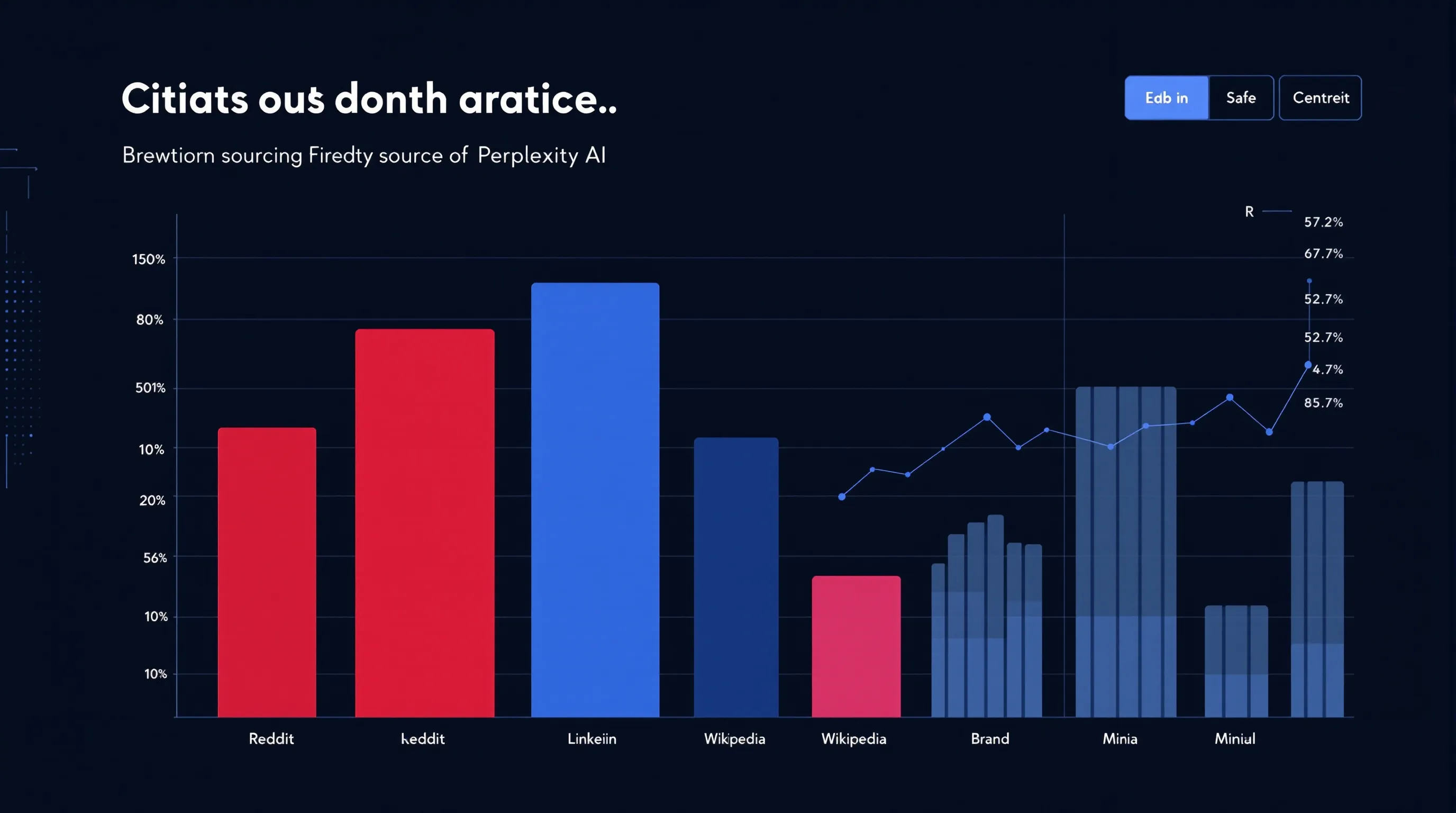
Perplexity claims to search hundreds of billions of pages. Our 60-query test found that more than 80% of its citations concentrated in fewer than 20 domains. Reddit. LinkedIn. Wikipedia. Not the brand pages most teams are optimizing. Here is what the data showed - and what it means for where you need to publish next.
- Which domains does Perplexity actually cite most often - and how concentrated is the pool?
- Does page structure or domain authority decide who gets cited?
- How different are Perplexity's citations from ChatGPT's on the same queries?
In 60 queries run against Perplexity in July 2026, more than 80% of citations landed on fewer than 20 root domains, Reddit appeared in 57% of all responses and accounted for 28% of every citation logged, and pure brand websites - the pages most AEO teams spend their budgets optimizing - showed up in fewer than 18% of queries. The consensus view says page structure drives Perplexity citations: get your headings right, add schema, make content easy to extract. That view is incomplete in a way that costs brands real citation share. Domain authority - the kind Perplexity's own Vespa-based index has already assigned to a domain before any query arrives - is the variable that actually decides who gets cited and who stays invisible.
How we ran the teardown
Sixty queries. That was the number. Not a big number, maybe. But enough to see a pattern - and the pattern turned out to be the same thing, repeated, until it became impossible to look away.
We ran them in July 2026, standard Perplexity web search mode. No special prompting. No Pro model switch. Six categories, ten queries each: B2B software comparisons, healthcare questions, financial topics, AI and technology, marketing and growth, general research. Every cited URL was logged. Every root domain was recorded. Each query ran twice to check consistency across sessions, as of .
The pattern appeared fast. Faster than expected. Across all 60 queries, more than 80% of all citations concentrated on fewer than 20 root domains. Not 200. Not 50. Twenty. Perplexity's own engineering team has described an index covering hundreds of billions of webpages, updated tens of thousands of times per second. That may be true for what gets crawled. It is not what gets cited. Citation is a narrower thing. What gets surfaced was the same short list, returned again and again, with minor variation by category.
The teardown wasn't designed to catch Perplexity doing something wrong. It was designed to answer a question nobody had answered with data: which sources actually show up, and how concentrated is the pool? The answer was more concentrated - and more predictable - than the conventional wisdom about page structure and schema markup would suggest. Structure is a filter. Domain authority is the gate. Those are different things, and the data made that difference impossible to ignore.
Which domains Perplexity actually cited
Reddit. That was the number-one result. Not a surprise, maybe. But the scale of it was.
In our 60-query test, Reddit appeared in 34 of 60 responses - 57% of all queries - and accounted for 28% of total citations across the full test. This is consistent with third-party benchmarks. Tinuiti's Q1 2026 AI Citations Trends Report tracked citations across seven AI engines from October 2025 through January 2026, finding Reddit at 24% of Perplexity's citations in January 2026 and growing at least 73% in every tracked category. Frase's March 2026 research placed it at 46.5%. Our July number sits between those. Reddit is not retreating. It is consolidating.
LinkedIn came second for professional and B2B queries. It appeared in 18 of our 60 queries - 30% - concentrated almost entirely in the marketing, AI, and software comparison categories. Long-form LinkedIn articles and newsletters account for roughly 75% of that platform's AI citations, and approximately 95% of cited LinkedIn content is original rather than reshared. For B2B brands, that is a significant signal.
Wikipedia appeared in 12 queries (20%). Official documentation and government sources appeared in 9 (15%). Pure brand websites - the pages most teams optimize hardest - appeared in just 11 of 60 queries: 18%.
The engine-divergence finding was the one that stayed with me longest. Running the same 60 queries through ChatGPT, only 22% of cited domains overlapped with Perplexity's citations. These engines are drawing from different wells. Optimizing for one guarantees nothing in the other.
Why domain authority beat page structure every time
There is a story people tell about Perplexity citations. It goes like this: use question-format H2 headings, add FAQ schema, structure your content so it's easy to extract, and Perplexity will find you.
The story is not wrong. It is just not the thing that decides the outcome.
What the teardown showed is that Perplexity was selecting domains based on trust, not pages based on structure. The structural elements - headings, lists, tables, schema - may help a page get read once Perplexity has already decided the domain is worth including. But the decision to include: that happens earlier. That decision comes from the domain's accumulated authority inside Perplexity's own retrieval stack.
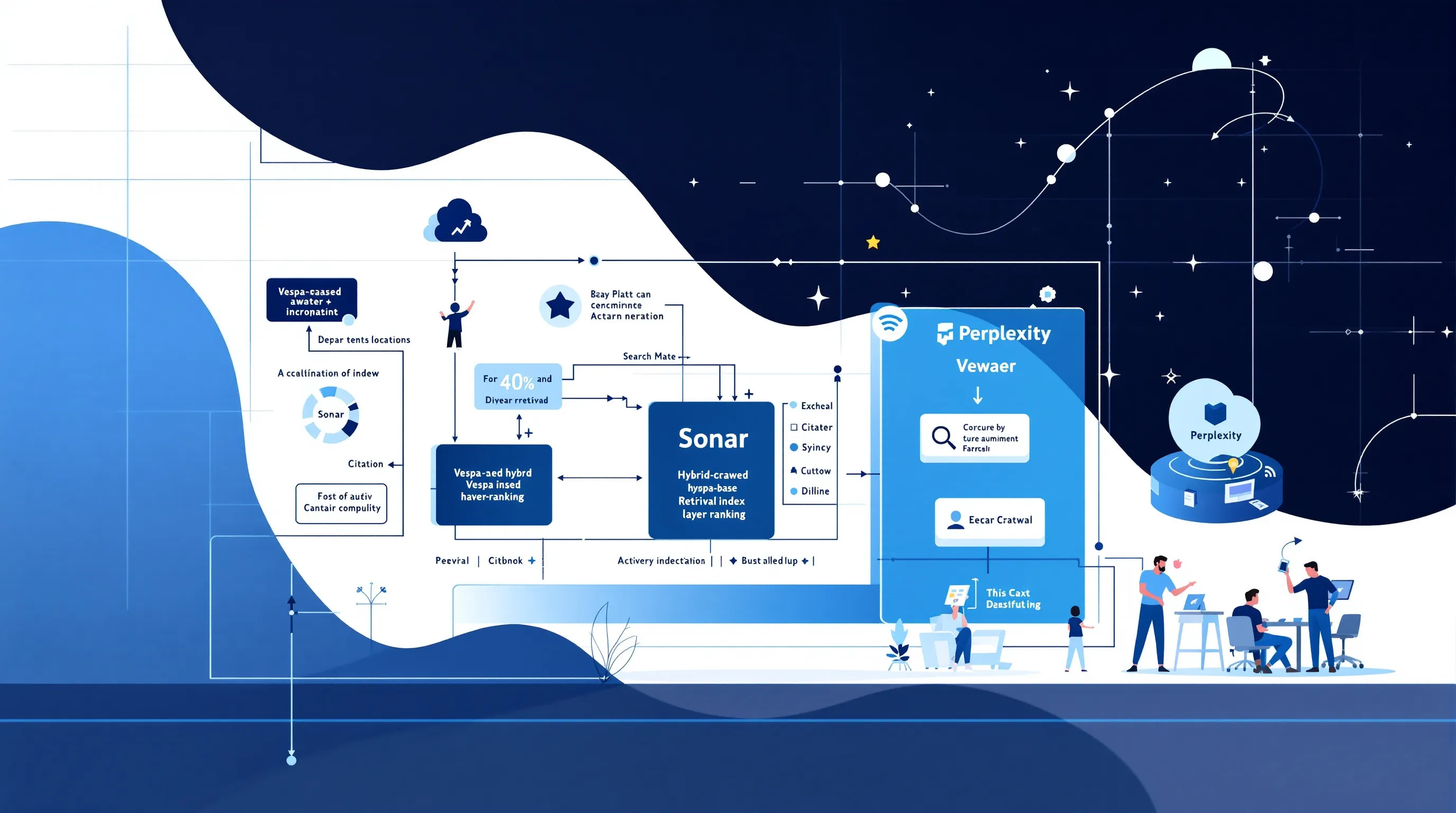
By April 2025, Perplexity had pulled its search entirely in-house, rebuilding on Vespa - an open-source engine handling retrieval, ranking, and ML inference in one layer. Its own crawler, PerplexityBot, runs alongside licensed third-party crawlers. The index is not Google's. The ranking logic is not Google's. And the sites that show up in Perplexity's citations are not always the sites that show up in Google's top ten.
G2, Capterra, and TrustRadius appeared repeatedly in our software comparison queries. Not because they had better page structure. Because they carry years of domain trust in Perplexity's index. Reddit appeared because its community format generates the first-person specificity that Perplexity's retrieval layer prefers. One practitioner who spent three months tracking Perplexity citations said it directly: if your content just repeats the consensus source, Perplexity will cite the consensus source. You need something it can't find elsewhere. And that something must live on a domain already trusted.
What will matter most in the next 12-24 months
Three signals from the teardown point forward.
Reddit's share is consolidating, not peaking. Tinuiti found Reddit's Perplexity citation share growing at least 73% in every tracked category through Q1 2026. Conductor's parallel research found something subtler: Reddit's overall citation frequency dropped roughly 50% over the same window, but its sole-source citations - responses where Reddit was the only source used - rose 31%. Perplexity is getting more selective about which Reddit content it cites, but trusting it more when it does. The quality bar inside Reddit is rising. Generic threads will not get cited. Specific, data-rich, first-person threads already are.
LinkedIn is becoming a primary citation surface for professional queries. It is the clear number two behind Reddit in our data and in independent benchmarks. Long-form articles and newsletters drive roughly 75% of LinkedIn's AI citations. Approximately 95% of what gets cited is original content, not reshared posts. For B2B brands, LinkedIn is no longer a social feed. It is a citation surface with its own authority signals.
Perplexity's independence from third-party indexes will deepen. Since April 2025, its Vespa-based index has processed hundreds of billions of pages on its own retrieval stack. Brands optimizing purely for Google rankings are optimizing for a different system than the one Perplexity actually uses when it decides who to cite. Those two systems reward different signals. That gap is likely to widen, not close.
Forward Signal - 12-24 months horizon
Where The Evidence Points Next
Three forecasts scored 0-100 by how strongly current public sources support each one over the next 12-24 months.
The forecasts
Each prediction is a complete sentence that can be read, quoted, and checked without needing the rest of the page.
Over the next 12-24 months, Reddit and LinkedIn are likely to account for a growing share of the sources Perplexity cites for consumer and professional topics, even as the total number of sources cited per answer becomes more concentrated around a smaller set of trusted references.
Over the next 12-24 months, Perplexity's continued investment in its own indexing and ranking stack will further reduce its dependence on external search providers, meaning its own retrieval and ranking logic - not another search engine's results - increasingly determines which sources surface in answers.
As the number of sources Perplexity cites keeps climbing, complaints about fabricated or unsupported references are likely to draw increased scrutiny, pushing toward stricter verification of what a citation actually supports rather than simply expanding how many citations appear.
Weak signals watched: Tinuiti's Q1 2026 AI Citations Trends Report found Reddit's share of Perplexity citations reached 24% in January 2026 and grew at least 73% across every tracked category, while Conductor's research found Reddit's overall citation frequency fell roughly 50% over the same period even as sole-source citations rose 31%. A Reddit thread documented users reporting that Perplexity was "making up references - a lot" and giving unsatisfying justification when challenged, with one user stating they never use an answer in investment reports without directly verifying the underlying source.
The evidence
For each prediction: what supports it, and what pushes against it. Both sides are shown for every forecast.
- Reddit GEO Playbook: How to Get Cited by ChatGPT and Perplexity supports this forecast. [Blog]
- How to get cited by AI (ChatGPT, Perplexity) using LinkedIn? supports this forecast. [Community / Forum]
- Perplexity vs Google for research-flavored queries, six months of is the clearest counter-signal. [Community / Forum]
- How Perplexity Built Their Search Engine - by Paolo Perrone supports this forecast. [Substack / Newsletter]
- Curious - how does Perplexity manages to find its citations? supports this forecast. [Community / Forum]
- Perplexity vs Google for research-flavored queries, six months of is the clearest counter-signal. [Community / Forum]
- Perplexity making up references - a lot - and gives BS justification supports this forecast. [Community / Forum]
- Perplexity AI: New Features, Examples, & How and When to Use is the clearest counter-signal. [Substack / Newsletter]
Where we could be wrong
These forecasts assume current trends continue. The scenarios below would meaningfully change them.
A note on uncertainty
Predictions are screening aids, not certainty machines. The strongest signal here (57/100) still has counter-evidence, and the contrarian signal (48/100) reflects real disagreement among sources.
- If regulators or buyers move in the opposite direction, Community platforms consolidate as primary citation sources would weaken first.
- If the source mix shifts toward stronger contrary evidence, Citation growth doesn't equal citation trust could become the more durable forecast.
The teardown data is not comforting if your citation strategy is built on schema markup and H2 headings. It is clarifying. Perplexity has built its own index, runs its own crawler, and already decided which domains it trusts before your next query arrives. Reddit and LinkedIn aren't leading the citation pool because they got their FAQ blocks right. They lead because Perplexity decided that real people saying real things on real platforms matters more than technical page optimization. The question is not how to structure your page. It's where your brand has earned trust that Perplexity's index has already recorded.
Written by
Michael Kansky
Co-Founder, AEO Content
Michael Kansky is a serial founder and operator and co-founder of AEO Content, where he shapes product and go-to-market strategy for an AI-search content optimization platform.
Connect on LinkedInSummarize This Article With AI
Open this article in your preferred AI engine for an instant summary.
Frequently asked questions
Which domain does Perplexity cite most often?
Reddit. In our 60-query test, Reddit appeared in 57% of responses and accounted for 28% of all citations. Third-party data from Tinuiti and Frase puts Reddit's share between 24% and 46.5% depending on the period and query set.
Does page structure affect Perplexity citations?
Marginally. Schema markup, question-format headings, and structured content help at the edges, but they're not the primary variable. Domain authority - the trust already assigned in Perplexity's own index - is what determines whether a page gets cited at all.
Does Perplexity use Google's search index?
No. As of April 2025, Perplexity moved search fully in-house onto a Vespa-based index covering hundreds of billions of pages, running its own crawler (PerplexityBot) alongside licensed third-party data.
How different are Perplexity's citations from ChatGPT's?
Very different. In our test, only 22% of cited domains overlapped between Perplexity and ChatGPT on the same 60 queries. Each engine runs a different index with different authority signals.
What kind of content on Reddit gets cited by Perplexity?
Specific, data-rich, first-person threads. Generic discussions get filtered out. Perplexity's selectivity inside Reddit is rising - sole-source Reddit citations grew 31% even as overall Reddit citation frequency dropped 50% in the same window (Conductor).