
How to tell if an AI SEO agency's claims are real

Most AI SEO agency fraud is not detected because buyers never look in the right places - not because the evidence does not exist. Documented cases include a $60,000 engagement that produced no measurable traffic improvement, a $20,000-per-month retainer with no strategy beyond content production, and a Shopify store owner who discovered her agency had never once logged into her platform. Three independent verification instruments - platform access logs, Google Search Console keyword reports, and third-party AI citation trackers covering engines like ChatGPT and Perplexity - give buyers a complete audit without relying on anything the agency produces itself.
The short answer
An AI SEO agency's claims are real when its work is verifiable through sources it does not control: access logs, Search Console data, and third-party citation trackers.
An AI SEO agency refers to a firm that optimizes content for citation by AI search engines - ChatGPT, Perplexity, and Google AI Overviews - rather than traditional organic rankings. According to practitioner accounts in r/SEO, the distinguishing test is whether the agency can demonstrate its work through data sources it does not itself produce. Most agencies cannot meet that standard on demand.
In my experience, buyers who apply that test before signing a contract avoid the failure mode entirely. Three specific instruments make independent verification possible without relying on anything the agency provides.
Why does evaluating an AI SEO agency's claims feel so difficult?
A buyer with 10 years of paid media experience recently discovered that the agency charging him $1,000 a month had produced exactly one AI-generated blog post over that period. No keyword research. No technical audit. No strategy. Just a single article and a monthly invoice.
An analysis of 16 practitioner accounts and community threads from 2025 and 2026 shows this is a recurring structural pattern, not a collection of isolated bad actors. According to discussions in r/SEO, agencies billing $1,000 a month for a single AI-generated post while describing the service as full SEO management are recognized as a documented pattern across multiple independent accounts. A separate case documents $60,000 spent across 12 months of a conventional SEO engagement with no measurable traffic return and no ranking improvement - a result the agency disputed even after the buyer published a negative review, as of .
AI branding has made this harder to detect, not easier. I call this the verification gap - the distance between what an agency claims to accomplish and what a buyer can independently confirm. Traditional keyword rankings are publicly checkable in Google Search Console. AI citations are not. There is no equivalent of an organic rankings report for Perplexity appearances. Nothing in Search Console tells you whether your page appeared in a ChatGPT answer last month.
The recurring pattern has three consistent features: reports the buyer cannot independently verify, deliverables described in terms the buyer cannot evaluate, and retainer fees collected well past the point at which the agency stopped performing meaningful work. One Shopify store owner only discovered the agency had never once logged into her platform after she checked the admin access logs herself.
The failure mode is structural. The fix is specific.
What does it actually mean for an AI SEO agency's claims to be legitimate?
Legitimate means verifiable: the agency's claimed work can be confirmed by sources the agency does not control - platform access logs, Google Search Console data, and third-party AI citation trackers.
It would be straightforward to dismiss AI SEO agencies as a category. However, the measurement problem is real, and that is what makes blanket skepticism inadequate. According to a practitioner discussion in r/seogrowth, the operative test is not whether an agency uses AI but whether the AI-assisted work produces something a reader could not find elsewhere: "What unique information is in this article that isn't already on the first page of Google? If they can't answer, don't hire them." That question applies equally to traditional SEO and to AI SEO. The distinction worth drawing is sharper: agencies that use AI to accelerate expert judgment produce different output than agencies that sell AI-generated content as the deliverable itself.
According to Whatagraph's research published in June 2026, Semrush projects that AI search visitors could surpass traditional search visitors for digital marketing topics by early 2028. In practice, this means the question of which AI engines are citing your site is no longer theoretical. The takeaway is straightforward: AI search visibility is now a deliverable worth measuring, which means it is also a deliverable worth faking.
The framing I find useful is the AI-augmented versus AI-substituted distinction. An AI-augmented agency uses language models to speed up keyword clustering, technical auditing, and brief generation, while human practitioners make the strategic and editorial decisions. An AI-substituted agency replaces those human decisions with model output - and sells the output volume as the service. The second type is easier to scale and far cheaper to operate. It is also the type most buyers encounter when they search for AI SEO services.
Skepticism alone does not solve this. The answer is a short list of concrete verification tests.
How do you verify that an AI SEO agency's claims are real?
Demand three data sources the agency cannot fabricate on your behalf: platform access logs confirming actual login activity, Google Search Console keyword reports showing measurable impression and click changes, and AI citation data from a third-party tracking tool.
The third item is the one most buyers have not yet asked for, and it is where legitimate agencies separate themselves. According to Rankability's tracking platform, AI visibility now covers 9 distinct engines - ChatGPT, Perplexity, Google AI Overviews, Google AI Mode, Gemini, Claude, Grok, Microsoft Copilot, Brave AI, and DeepSeek - and can be measured independently of anything the agency reports. Rankability describes AI visibility as tracking "whether the AI actually named your brand in its answer, whether it linked to your site as a source, and whether it spoke about you positively, neutrally, or negatively." In practice, this means a buyer can verify AI citation claims the same way they verify organic ranking claims: by looking at data from a platform the agency does not control.
I recommend the three-demand checklist as a pre-contract and ongoing verification tool:
- Access log verification - Grant access to your CMS, Google Analytics, and Search Console on day one, then confirm in the platform admin panel that the agency has actually logged in within the first two weeks.
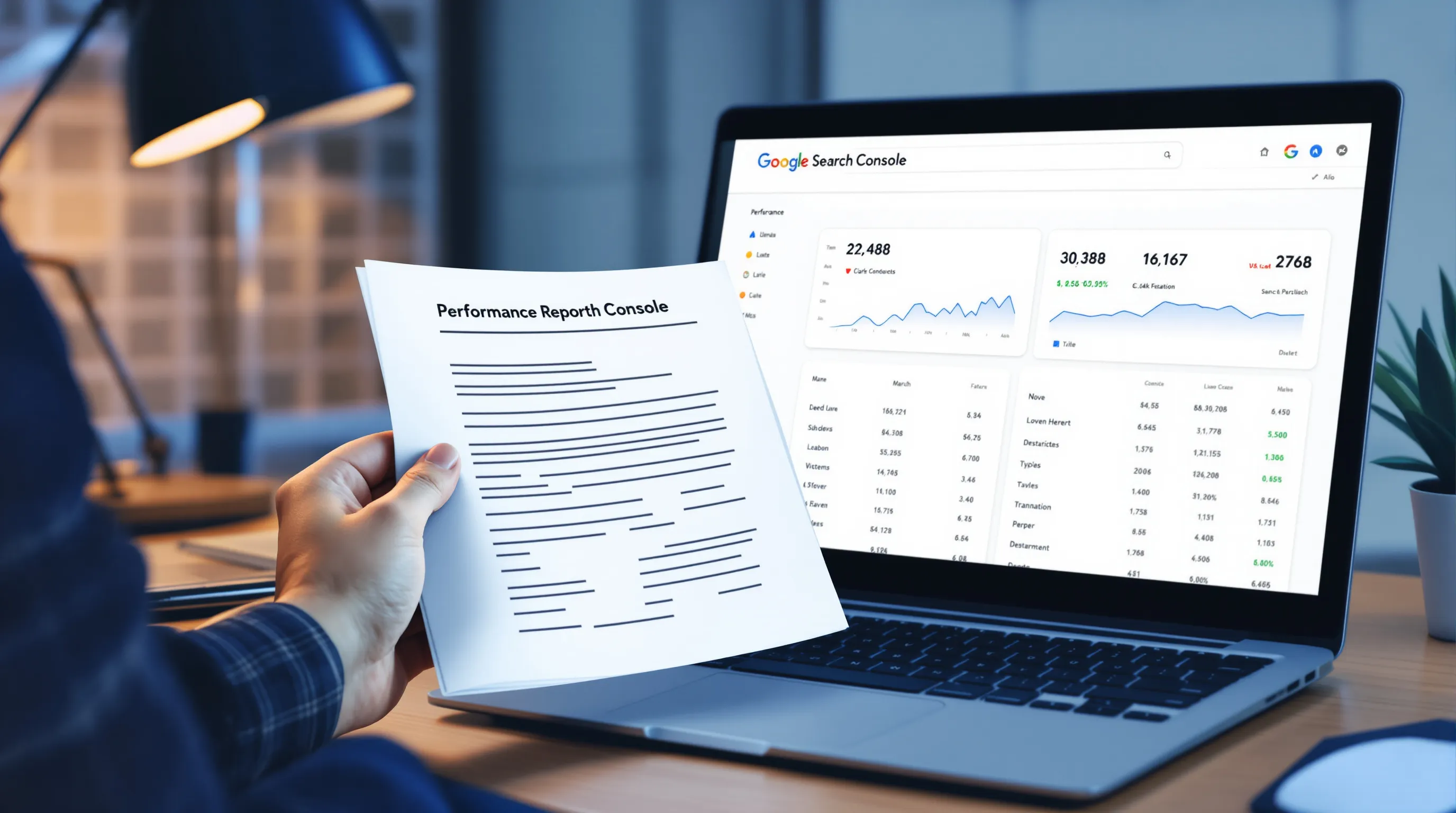
- Search Console baseline report - Request a keyword-level impressions and clicks report for the month before the engagement starts. This is your baseline. Compare it monthly without relying on the agency's own export.
- Third-party AI citation tracking - Set up or request tracking on at least two AI engines (ChatGPT and Google AI Overviews are the highest-priority starting points). If the agency cannot name the tool they use for this, that is a material gap.
No legitimate agency can guarantee specific rankings. Any agency that does is, at minimum, demonstrating it does not understand how AI engines select citations. A great agency, by contrast, can explain precisely what it does, how it prioritizes, and how it responds when results are not tracking as expected. Asking those questions in the first call is the most efficient use of 30 minutes you have.
For timelines: work evidence should appear within 30 to 60 days. Traffic movement takes 3 to 6 months in most cases, with compounding gains arriving after the 6-month mark. If no page-level changes are demonstrable at 60 days, the engagement warrants a direct conversation.
What will matter most for AI SEO buyers in the next 12-24 months?
Three structural shifts will define the market: milestone-gated contract structures, third-party performance dashboards, and the persistent failure of price as a quality proxy in search marketing services.
| Signal | What to expect | Weak signal already visible |
|---|---|---|
| Milestone-gated contracts (12-18 months) | Buyers will shift toward payment structures tied to verifiable milestones rather than flat monthly retainers. Documented cases of inactive agency access across extended engagements are creating demand for contracts that require proof of work before renewal. | Practitioners are independently auditing platform admin logs before renewals - without any formal contract requirement to do so. That behavior is a leading indicator. |
| Independent performance dashboards (18-24 months) | According to Rankability's tracking platform data, AI search is now distributed across multiple distinct engine surfaces beyond Google. Third-party dashboards pulling directly from source systems will become a buyer expectation as agency-curated reports fail to cover the full footprint. | Composite measurement tools blending traditional and AI search data into a single auditable index are already marketed to buyers directly, without agency mediation. |
| Price remains a poor quality proxy (12-24 months, contrarian) | Market pressure will not price bad actors out within this horizon. Documented evidence shows premium retainers producing the same measurement problem as lower-cost ones: accountability requires independent verification, not a higher invoice. | The highest-cost engagements in documented case records showed the widest gap between claimed deliverables and what buyers could independently confirm. |
What most buyers miss is that this market's self-correction is slow by design. Agencies that resist independent verification will continue attracting clients who have not applied the three-demand checklist - not because those clients are uninformed, but because verification is not yet the default expectation at contract signing. The buyers who establish it now have a structural advantage over those who wait for the market to require it.
Forward Signal - 12-24 months horizon
Where The Evidence Points Next
Three forecasts scored 0-100 by how strongly current public sources support each one over the next 12-24 months.
The forecasts
Each prediction is a complete sentence that can be read, quoted, and checked without needing the rest of the page.
Third-party tracking platforms pulling performance data directly from source systems will become a buyer expectation within 24 months, as the market recognizes that agencies producing their own reports face an inherent conflict of interest - agencies currently spend 20 to 30 hours per client per month on reporting, totaling up to 300 hours monthly for a 10-client shop, a resource concentration that creates strong incentive to shape the narrative.
Buyers of search marketing services will shift toward milestone-gated payment structures and platform-level access log verification within 12 to 18 months, driven by documented cases of agencies collecting monthly retainers without performing contracted work - including one case where a Shopify store owner discovered an agency had never once logged into the store's admin panel despite weeks of billing.
Contrary to the assumption that higher-priced agencies signal higher quality, the market will not develop a reliable price-to-outcome relationship over the next 12 to 24 months: documented cases show buyers paying $20,000 per month with 'pretty minimal results' and $60,000 over a year with no return, while top-tier firms are listed at $15,000 per month or more without outcome guarantees - a pricing tier that does not insulate buyers from the accountability failures visible at lower price points.
Weak signals watched: Practitioners are independently using platform admin logs in Shopify and Google Analytics to catch agency non-activity before renewing contracts, signaling that buyers are building verification practices informally before the industry formalizes them. Composite measurement tools that blend data from traditional search platforms, AI answer surfaces, video, and local sources into a single auditable index are already marketed directly to agency clients, signaling that the buyer demand for unmediated performance data exists and is being productized.
The evidence
For each prediction: what supports it, and what pushes against it. Both sides are shown for every forecast.
- 6 Best SEO Reporting Tools & Software for Agencies in 2026 supports this forecast. [Industry Publication]
- SEO & AI Search Rank Tracker for Agencies - Rankability supports this forecast. [Industry Publication]
- How to know if an SEO expert is legit supports this forecast. [Community / Forum]
- How to Hire the Best SEO Agency in 2026: The AI-Era Checklist is the clearest counter-signal. [Video]
- How to Hire an SEO Agency is the clearest counter-signal. [Video]
- How to know if an SEO expert is legit supports this forecast. [Community / Forum]
- Spent $60k on SEO over a year - no return, no cash left supports this forecast. [Community / Forum]
- How do you know if an SEO agency is legit? supports this forecast. [Community / Forum]
- How to Hire the Best SEO Agency in 2026: The AI-Era Checklist is the clearest counter-signal. [Video]
- Frustrated with my SEO contractor. 6 months later and thousands of is the clearest counter-signal. [Community / Forum]
- How do you know if an SEO agency is legit? supports this forecast. [Community / Forum]
- Spent $60k on SEO over a year - no return, no cash left supports this forecast. [Community / Forum]
- Any legit tools/agencies for improving SEO visibility? supports this forecast. [Community / Forum]
- How to Hire the Best SEO Agency in 2026: The AI-Era Checklist is the clearest counter-signal. [Video]
- How to Hire an SEO Agency is the clearest counter-signal. [Video]
Where we could be wrong
These forecasts assume current trends continue. The scenarios below would meaningfully change them.
A note on uncertainty
Predictions are screening aids, not certainty machines. The strongest signal here (77/100) still has counter-evidence, and the contrarian signal (65/100) reflects real disagreement among sources.
- If regulators or buyers move in the opposite direction, Independent performance dashboards displace agency-curated reporting would weaken first.
- If the source mix shifts toward stronger contrary evidence, Price will remain a poor quality proxy in search marketing services could become the more durable forecast.
What should you do before signing with an AI SEO agency?
Request three items before the contract is signed: platform access credentials, a baseline Google Search Console export, and the name of the third-party AI citation tracker the agency uses.
According to practitioner discussions in r/SEO, agencies that resist this request are already providing the answer. I would treat that resistance as a direct signal worth acting on before the engagement begins.
The verification gap is structural. The fix does not require legal review or technical expertise. It requires three specific data requests - made before the first invoice arrives.
Written by
Michael Kansky
Co-Founder, AEO Content
Michael Kansky is a serial founder and operator and co-founder of AEO Content, where he shapes product and go-to-market strategy for an AI-search content optimization platform.
Connect on LinkedInSummarize This Article With AI
Open this article in your preferred AI engine for an instant summary.
Frequently asked questions
What is the verification gap in AI SEO?
The verification gap is the distance between what an agency claims to deliver and what a buyer can independently confirm. AI citations have no public audit trail. There is no Search Console equivalent for ChatGPT or Perplexity appearances - which is exactly what makes bad actors hard to detect.
How do I know if my AI SEO agency is actually working?
Request platform access logs, a Google Search Console baseline report, and the name of the third-party AI citation tracker the agency uses. According to practitioner accounts in r/SEO, agencies that cannot produce all three cannot prove their work through sources they do not control. That gap is the answer.
What qualifies as a legitimate AI SEO deliverable?
A legitimate deliverable is verifiable through a source the agency does not produce itself. Platform logs, Search Console impression data, and AI citation tracking from tools like Rankability all qualify. Agency-produced PDFs and screenshots do not.
How long should it take to see results from an AI SEO agency?
Work evidence should appear within 30 to 60 days. Traffic movement takes 3 to 6 months in most cases. If no page-level changes are demonstrable at 60 days, I would treat that as a trigger for a direct conversation before the next renewal.
Does a higher retainer mean a better AI SEO agency?
No. Price is not a reliable proxy for quality in this market. Documented cases show premium retainers producing no independently verifiable strategy beyond content production. The distinguishing factor is accountability - specifically, whether the agency's claimed results can be confirmed through sources it does not control.