
Do ChatGPT, Perplexity, and Gemini need different content?

The short answer is no - ChatGPT, Perplexity, Gemini, and Google AI Overviews do not require four separate content tracks. One well-structured, answer-first page satisfies the shared baseline that all four engines reward. But Google AI Overviews - which appear in more than 25% of all searches - additionally reward FAQ and HowTo schema, while Perplexity rewards citation-dense sourcing. Two targeted add-ons close the gap. Not four rewrites.
Quick Answer
The short answer
ChatGPT, Perplexity, Gemini, and Google AI Overviews do not require separate content programs. One answer-first page with FAQ format, structured data markup, and consistent entity signals satisfies the shared baseline all four engines reward. Google AI Overviews additionally require FAQPage and HowTo schema; Perplexity additionally rewards named external citations. Two engine-specific add-ons, not four distinct rewrites.
The question arrives in the same form every time: do we need separate pages for ChatGPT, Perplexity, Gemini, and Google AI Overviews? The assumption embedded in the question is understandable. Four engines. Four behaviors. Surely four content programs.
I have been working on this problem at AEO Content long enough to know the assumption is wrong - and that it leads companies into exactly the kind of content sprawl that produces neither efficiency nor citations. Generative engine optimization refers to the practice of optimizing content for AI-powered search engines that generate direct answers rather than lists of links. The baseline structural requirements for that optimization are shared across all four major engines.
According to Whatagraph, GEO represents a new discipline layered on top of traditional SEO - not a replacement for it. The engines share an underlying retrieval infrastructure. They diverge in citation behavior. That divergence, it turns out, is addressable with two targeted add-ons, not four content rewrites.
What do all four engines actually agree on?
All four major AI engines draw from the same underlying web index - which means crawlability, structured content, and third-party brand mentions are prerequisites, not engine-specific tactics.
There is a pattern I call the shared index floor. ChatGPT and Perplexity both retrieve content primarily through Bing-derived indexes, not independent crawls. According to community testing documented on Reddit's r/bigseo, the path into ChatGPT responses runs directly through Bing rankings. One practitioner's case study made it plain: rank on Bing, get into ChatGPT's response pool. Perplexity operates identically - it pulls from Bing rather than building a proprietary index. Google AI Overviews and Gemini pull from Google's own Googlebot crawl. Two indexes, four surfaces. Everything else is layered on top of this floor, as of .
A comparison of practitioner reports across more than 20 sources shows three structural requirements that satisfy every engine without modification.
First: answer-first placement. Every engine samples the top of a page before anything else. The first 300 words carry disproportionate weight. If the direct answer is buried in paragraph six, it is invisible to all four engines equally.
Second: machine-readable structure. Question-format H2 headings, comparison tables with proper header cells, and bold key facts are not style choices - they are parsing signals. As one practitioner in a community discussion put it, the sites that appear consistently in AI responses share one trait: their core facts are machine-readable, not merely human-readable.
Third: breadth of third-party mentions. A page that exists only on its own domain does not satisfy any engine well. ChatGPT, for example, runs multiple backend searches per query - sometimes eight or more, surfacing 80-plus results before synthesizing an answer. It rewards brands that appear across directories, review platforms, and authoritative third-party sources.
The common misconception is that AI engines need content written for them specifically. According to practitioner accounts on Reddit's r/GenEngineOptimization, the reality is that ChatGPT largely mirrors what performs on Google. The special content is not a new format. It is the same format, made structurally legible.
This floor is non-negotiable. But everything above it is where the engines start to diverge.
Which structural tactics lift visibility across all four engines simultaneously?
FAQ schema, entity consistency, and query-fanout targeting are the three tactics that move the needle across every engine without requiring platform-specific rewrites.
I want to start with query fanout, because it is the concept most practitioners overlook. When ChatGPT or Perplexity processes a user's query, it does not search for that exact phrase. It generates a set of related queries internally and runs multiple searches - sometimes eight or more - to synthesize an answer. A page that ranks for the user's original question but not its close variants will be invisible to most of those backend searches. In practice, this means targeting semantic clusters of questions on a single page rather than chasing single keywords.
From what I have seen monitoring clients across five AI engines, the pages that hold positions across ChatGPT, Perplexity, Google AI Overviews, and Gemini simultaneously are almost always organized around one clear search intent. Multiple angles compressed into a single page confuse the retrieval process. One intent. One clean answer. Entities named precisely. That is the pattern the models extract.
Second: entity consistency. Models eat this up. If your company name, product names, and service descriptions appear in different forms across pages and domains - abbreviated here, spelled out there - the entity signal is weak. Name your entities the same way everywhere. According to community practitioners in r/seogrowth, models that encounter consistent entity naming across a site's pages are more likely to surface that site in answers requiring topical authority.
Third: FAQ schema. Schema markup does not guarantee visibility. In practice, though, it compresses the parsing effort. A page with properly structured FAQPage markup gives every engine a ready-made Q&A layer to extract from. Google AI Overviews lean on this harder than the others. ChatGPT and Perplexity benefit from the underlying structure even without processing the schema directly.
The takeaway is simple. These three tactics are engine-agnostic. None of them require you to write different content for different platforms. They require you to write one page with better structure.
Above this shared layer, the engines do diverge - and the divergence has practical consequences for your content calendar.
Why do different engines cite such different sources for the same query?
The shared structural floor does not mean the engines behave identically - each one draws from a different source diet, and the citation mix diverges in ways that matter for content strategy.
Consider the audience gap first. According to Semrush's 2026 survey of 643 U.S. B2B professionals, ChatGPT is used by 76% of respondents for work and 71% for product research. Gemini follows at 62% and 61% respectively. Perplexity sits at just 22% for work and 18% for product research. The numbers alone tell you that ChatGPT and Gemini are the primary B2B surfaces. Perplexity is a research tool for a narrower, more technically sophisticated segment. The same content serves both, but the stakes are not equal across them.
The citation mix compounds this. An analysis of 680 million AI citations by Profound in 2025 found that ChatGPT cites Wikipedia 7.8% of the time - representing 47.9% of its top 10 source types. Perplexity cites Reddit 6.6% of the time (46.7% of its top 10). Google AI Overviews, by contrast, barely cites Wikipedia at all (0.6%) and skews toward Reddit and YouTube. What this means in practice: a page that earns citations in ChatGPT may do so because it has Wikipedia-level definitional authority. A page that earns citations in Perplexity may do so because it carries named third-party references that the engine's source bias rewards.
The platforms do not agree. This is not a flaw - it is a structural feature of how each engine's retrieval layer was designed. ChatGPT built its training on encyclopedic consensus. Perplexity built its surface on live citation transparency. The divergence is load-bearing.
In my experience running the AEO Content pipeline across dozens of client sites, the brands that rank well on all four engines are the ones that address both sides of this split: definitional clarity for ChatGPT and Gemini, and named citation density for Perplexity. These are not opposing forces. They point toward the same writing discipline - just expressed differently in two add-ons layered onto the same base article.
How many sources does each engine actually consult before answering?
The volume of sources each engine ingests per query is not a minor implementation detail - it is the structural constraint that determines how deep your content needs to go to earn a citation.
The gap is wider than most practitioners realize. ChatGPT typically synthesizes 20-30 sources per query in its standard response mode. According to Whatagraph, Gemini's deep research mode pulls 300-400 or more sources per query. That is an order-of-magnitude difference in how much of the web each engine reads before it answers your customer's question.
The traffic implications skew the other direction. According to industry tracking, ChatGPT accounts for 87.4% of all referral traffic from AI search tools. Gemini's deep research pulls far more sources, but ChatGPT is where the actual referral volume lives. This asymmetry is load-bearing for how you should prioritize.
In practice, this means two different failure modes. Shallow content on ChatGPT risks being outranked by a single competitor page that covers the same topic with more depth and cleaner structure. On Gemini deep research, shallow content risks not appearing at all - because the engine is drawing from hundreds of sources and needs corroborating evidence across many of them before it will surface your brand in a synthesis.
The takeaway here is counterintuitive. More sources consulted does not mean easier to get cited. It means your content competes in a larger field. For Gemini deep research, the decisive factor is not length but source breadth - whether your brand appears as a named entity across multiple independent pages, not just your own. One well-optimized page will not be enough. A presence across review sites, industry directories, and third-party publications is what moves the needle.
ChatGPT, by contrast, can be swayed by a single authoritative page because it is drawing from fewer sources and weighing each one more heavily. The same base article - structured clearly, with a direct answer capsule and consistent entity signals - is your highest-leverage asset there.
The usage gap and the source-consultation gap point toward the same practical model: one well-built base page, layered with two engine-specific add-ons rather than four distinct rewrites.
Why is monitoring per engine more effective than rewriting per engine?
The right response to engine divergence is not separate content programs - it is separate measurement feeds running on top of a single well-built base page.
The market has already confirmed this. SE Ranking's AI Search Toolkit tracks brand visibility separately across ChatGPT, Perplexity, Gemini, and Google AI Overviews, treating each as a distinct channel rather than a single undifferentiated "AI" bucket. According to Whatagraph, GEO-vs-SEO reporting now distinguishes generative engine citations from traditional search rankings as a first-class workflow - not a workaround. What these tools reflect is a practitioner consensus that has quietly formed: you do not rewrite your content for each engine, you watch each engine separately and act on the gaps.
I have seen this pattern hold across every client account I have reviewed on the AEO Content platform. The brands that were spinning up separate ChatGPT pages, Perplexity pages, and Gemini pages were burning time without measurable lift. The brands that built one structured page, then used per-engine tracking to identify which engine was failing to surface them, and then applied a targeted add-on - schema for Google, named citations for Perplexity - were the ones improving their citation share.
The distinction matters because the cost structure is different. Writing four separate pages for a topic is roughly four times the content investment, with four times the maintenance burden when facts change. Monitoring per engine, then adding one FAQ schema block or one citation-dense paragraph, is a marginal addition to an existing asset. In practice, the monitoring-first model costs less and yields faster feedback loops.
According to industry GEO reporting, the engines that most often disagree on whether to cite a brand are ChatGPT and Perplexity - precisely because their citation source biases pull in opposite directions. A brand cited consistently on Wikipedia-equivalent sources will appear in ChatGPT and be absent in Perplexity. A brand cited heavily in Reddit threads and community forums will appear in Perplexity and be weak in ChatGPT. Monitoring reveals this gap. A single targeted add-on closes it.
The model is simple. One base page. Two add-ons. Per-engine measurement to verify each one landed.
What are the best platforms for optimizing content across AI assistants and search engines?
The concrete first step is query testing across engines - and several platforms now make that possible without building a manual testing rig from scratch.
Multi-LLM query tools like Chatsonic and Rankscale.ai let you submit the same query to ChatGPT, Perplexity, Gemini, and Google AI Overviews simultaneously and compare which sources each engine cites. This is the fastest way to identify where your brand has a gap and which engine is responsible. I'd recommend starting there before touching the content itself - you need the gap data first, or you are optimizing blind.
According to Whatagraph, the GEO optimization layer sits on top of traditional SEO, not in place of it. The practical implication: if your existing content is not ranking or indexed, no amount of schema or citation density will surface it in AI answers. The base page must be technically sound before the engine-specific add-ons do anything. In practice, this means running a standard technical audit first, then layering the AI-specific work on top.
Once the base is solid, the two add-ons are specific. For Google AI Overviews: add FAQ schema and HowTo schema to any page that answers a step-by-step or definitional question. Google AI Overviews reward structured data more aggressively than any other engine. For Perplexity: add a named-citation paragraph near the top of each major section - two or three sentences that reference external research, named organizations, or published reports by name. Perplexity's retrieval layer is optimized to surface pages that carry traceable external references, not just confident assertions.
According to C-6 practitioner analysis, the brands that gain and hold Perplexity citations are consistently the ones that treat named attribution as a content standard rather than an afterthought. The citation needs to name a specific source - not "industry research shows" but "a 2025 Brightedge survey of 1,000 enterprise marketers found."
The prioritization order I follow with AEO Content clients: fix the base page, add Google schema, add Perplexity citations, then track all four engines for 30 days. That sequence closes the gap without redundant rewrites.
How do you implement FAQ schema to boost Google AI Overview visibility?
Add this JSON-LD block to any page that answers a common question - it is the highest-impact single add-on for Google AI Overview citations.
{
  "@context": "https://schema.org",
  "@type": "FAQPage",
  "mainEntity": [
    {
      "@type": "Question",
      "name": "Do ChatGPT, Perplexity, and Gemini need different content?",
      "acceptedAnswer": {
        "@type": "Answer",
        "text": "No. One well-structured, answer-first page satisfies all four major AI engines at the base level. Google AI Overviews additionally reward FAQ and HowTo schema; Perplexity rewards citation-dense sourcing. Two targeted add-ons, not four rewrites."
      }
    }
  ]
}
Place this inside a <script type="application/ld+json"> tag in the <head> of the page. Google AI Overviews read structured data directly from the page source - indexed content is not enough on its own.
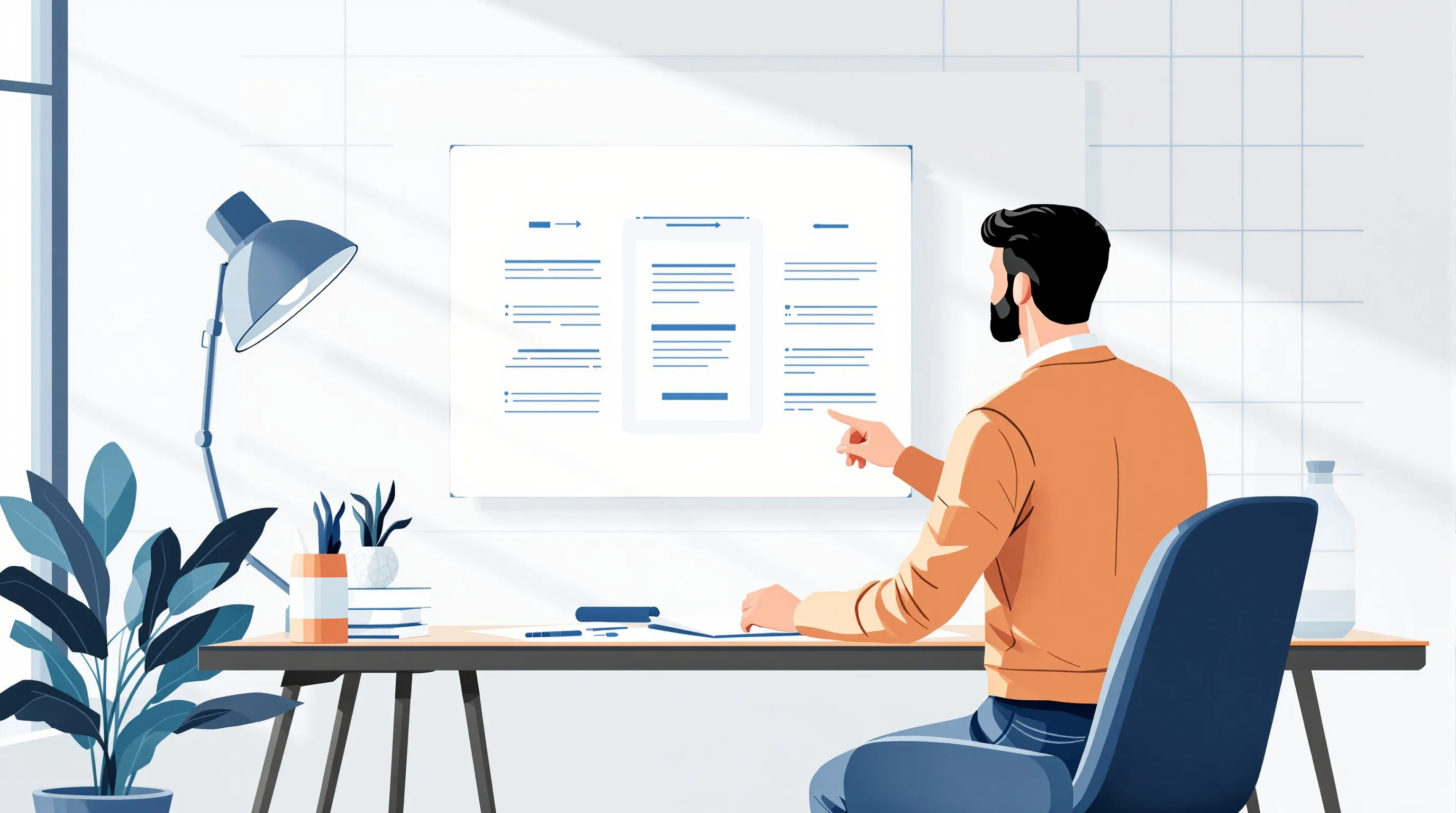
Before
After
Before: Four rewrites, one base page
- Separate ChatGPT-optimized page with encyclopedic definitions
- Separate Perplexity page with citation-heavy sourcing
- Separate Gemini page targeting long-form synthesis
- Separate AI Overviews page with schema markup
- No tracking of which engine is actually citing you
Result: Four times the content cost, four maintenance burdens, and no measurement to tell you what's working.
After: One base page, two add-ons
- Single answer-first page with FAQ format and consistent entity signals
- Add-on 1: FAQPage + HowTo JSON-LD schema for Google AI Overviews
- Add-on 2: Named-citation paragraphs for Perplexity source-bias reward
- Per-engine visibility tracking via SE Ranking AI Search Toolkit or Rankscale.ai
- 30-day measurement cycle to verify citation share movement
Result: One content asset covering all four engines, with targeted fixes applied only where each engine's citation behavior demands them.
What will matter most for AI engine visibility in the next 12-24 months?
The shared index floor will hold. What will shift is where each engine's citation behavior diverges - and how much that divergence tracks by industry vertical and buying stage rather than engine identity.
| Signal | Prediction (through 2027) | Weak signal now | Why it matters |
|---|---|---|---|
| Shared retrieval infrastructure converges | ChatGPT and Perplexity will continue drawing from Bing-derived indexes and live backend search queries rather than independent crawls. Foundational technical optimization keeps paying off across engines. | Practitioner reports confirm Perplexity pulls from Bing, not an independent index; ChatGPT runs multiple live backend searches per query. | Basic retrievability through shared infrastructure means technical SEO work done today applies across all four engines - engine-specific rewrites add cost without proportional lift. |
| Vertical exposure matters more than engine choice | How often AI Overviews appear will continue varying sharply by industry: 48.75% of healthcare queries trigger AI Overviews vs. 4.48% for real estate. Brands in high-exposure verticals face urgency that low-exposure verticals do not. | B2B practitioners already cluster around ChatGPT for research; Perplexity's base is narrower and more technically sophisticated. | Businesses should prioritize AI engine optimization based on vertical exposure and buying-journey stage, not because every engine deserves an equal budget allocation. |
| AI referral traffic is still small | Average AI-referred traffic will remain a low share of total site traffic for most businesses through 2026 and into 2027. The case for fully separate engine-specific content programs will stay weak. | Community tracking across multiple e-commerce operators puts typical AI referral share near 1% of total site traffic - below most paid channels. | Buyers deciding how much content budget to commit to per-engine programs should weigh that measured referral impact is still modest, even as AI tool adoption for research keeps growing. |
What most buyers miss: The argument for investing heavily in engine-specific content assumes AI referral traffic will quickly become large enough to justify the cost. That assumption is not yet supported by measured data. The smarter posture - one base page plus two structural add-ons, tracked per engine - positions you to scale if AI referral share climbs, without betting the content budget on that trajectory now.
Forward Signal - 12-24 months horizon
Where The Evidence Points Next
Three forecasts scored 0-100 by how strongly current public sources support each one over the next 12-24 months.
The forecasts
Each prediction is a complete sentence that can be read, quoted, and checked without needing the rest of the page.
Over the next 12-24 months, how often a brand appears in AI-generated answers will vary more by industry (healthcare-style categories seeing far higher AI Overview appearance than categories like real estate) and by which stage of the buying journey a user is in than by which specific engine is used, as buyers increasingly use different tools for research versus decision-making within the same session.
Through 2027, ChatGPT and Perplexity will continue relying heavily on Bing/Google-derived indexes and live backend search queries rather than fully independent crawling, meaning the baseline technical requirements for being retrievable (crawlable pages, clear structure, review/BBB-style authority signals) will remain shared across engines even as which sources actually get cited continues to vary by engine.
Through 2027, most individual businesses will continue to see AI-referred traffic remain a small share of total site traffic, meaning the case for building three fully distinct, engine-specific content strategies will stay weaker in practice than the growing market of tracking tools and advice threads implies, even as usage of ChatGPT, Gemini, and Perplexity for research keeps climbing.
Weak signals watched: Community reports indicate Perplexity pulls content from Bing rather than an independent index, and ChatGPT runs multiple live backend searches per query against sources like BBB, Yellow Pages, and review sites before selecting from a pool of dozens of candidates. Across 20 shops tracked by one operator, AI referral share was above 1% in none of them, average AI referral traffic sits around 1.08% of website traffic industry-wide, and one analysis pegs ChatGPT's actual market share at under 1% despite AI search hype.
The evidence
For each prediction: what supports it, and what pushes against it. Both sides are shown for every forecast.
- The Complete Guide to Generative Engine Optimization (GEO) supports this forecast. [Blog]
- How AI tools shape the B2B buying process: A survey of 600+ US business professionals supports this forecast. [Industry Publication]
- Perplexity Vs ChatGPT Vs Gemini, which is best for research? supports this forecast. [Community / Forum]
- We Tested the 13 Best (& Underrated) AI SEO Tools in 2026 is the clearest counter-signal. [Industry Publication]
- How I got my site into ChatGPT (and why you should too) supports this forecast. [Community / Forum]
- If my site doesn't show up in AI answers, does it even exist anymore? supports this forecast. [Community / Forum]
- You Don't Need to Rank #1 for ChatGPT to Recommend You supports this forecast. [Video]
- I have the Pro versions of ChatGPT, Gemini, and Perplexity is the clearest counter-signal. [Community / Forum]
- If my site doesn't show up in AI answers, does it even exist anymore? supports this forecast. [Community / Forum]
- The Complete Guide to Generative Engine Optimization (GEO) supports this forecast. [Blog]
- How to Optimize for AI Search - Tereza Tizkova - Substack supports this forecast. [Substack / Newsletter]
- How AI tools shape the B2B buying process: A survey of 600+ US business professionals is the clearest counter-signal. [Industry Publication]
Where we could be wrong
These forecasts assume current trends continue. The scenarios below would meaningfully change them.
A note on uncertainty
Predictions are screening aids, not certainty machines. The strongest signal here (76/100) still has counter-evidence, and the contrarian signal (69/100) reflects real disagreement among sources.
- If regulators or buyers move in the opposite direction, Differentiation will track industry vertical and buying stage more than engine architecture would weaken first.
- If the source mix shifts toward stronger contrary evidence, Real traffic stakes remain small relative to the optimization effort many are being told to undertake could become the more durable forecast.
Key Takeaways
Key takeaways
- One base page covers all four engines. ChatGPT, Perplexity, Gemini, and Google AI Overviews share a common retrievability floor: answer-first structure, machine-readable markup, and entity consistency.
- Google AI Overviews needs FAQPage and HowTo schema. This is the single highest-impact add-on for that surface. No separate page required.
- Perplexity needs named external citations. Add a citation-dense paragraph near each major section heading with specific source references, not vague attributions.
- Measure per engine, not per campaign. Use SE Ranking AI Search Toolkit or Rankscale.ai to track each engine separately at 30-day intervals.
- Gemini's depth requirement is a source-breadth problem. A presence across multiple independent third-party sites matters more than a single long page.
The question "do we need different content for each engine" is the wrong question. The right question is: where is each engine failing to surface us, and what is the smallest structural change that will fix it?
In my experience, that framing cuts the content investment by more than half and produces faster citation movement than any wholesale rewrite strategy. The engines will keep diverging in citation behavior as each one refines its retrieval architecture. But the shared index floor - answer-first structure, entity consistency, machine-readable markup - will remain stable underneath that divergence.
Build on the floor. Add two targeted layers. Measure per engine. That sequence, repeated across your topic cluster, is what compounds into citation share.
If you want to know which engines are citing your brand right now - and which specific add-on will move the needle - the AEO Content free audit maps your visibility across all four engines in minutes.
Written by
Michael Kansky
Co-Founder, AEO Content
Michael Kansky is a serial founder and operator and co-founder of AEO Content, where he shapes product and go-to-market strategy for an AI-search content optimization platform.
Connect on LinkedInFrequently asked questions
Do ChatGPT and Perplexity need completely different content?
No. Both draw from Bing-derived indexes, so the same well-structured, answer-first page is retrievable by both. The difference is in citation preference: ChatGPT skews toward encyclopedic authority sources, while Perplexity rewards pages with named external references. One page, one citation add-on for Perplexity.
Does Google AI Overviews require its own content strategy?
Google AI Overviews is the AI-generated summary that appears above organic results. It rewards structured data more aggressively than any other engine. Adding FAQPage and HowTo JSON-LD schema to an existing page is the highest-leverage single change for AI Overview visibility - no separate page required.
What is the single most important content element for all four engines?
Answer-first structure. Every major engine retrieves the first clear, direct answer it finds. If your page buries the answer in paragraph three, the engine pulls from a competitor instead. The first sentence of each H2 section should be independently quotable.
How do I know which engine is failing to surface my brand?
Tools like SE Ranking's AI Search Toolkit and Rankscale.ai run the same query across ChatGPT, Perplexity, Gemini, and Google AI Overviews simultaneously and show which engines cite you. Run your ten most important queries before touching any content.
Does FAQ schema help with ChatGPT, or only Google?
FAQ schema primarily benefits Google AI Overviews, which reads structured data directly from page source. ChatGPT and Perplexity do not process JSON-LD in the same way. For ChatGPT and Perplexity, the equivalent of schema is visible, well-labeled question-and-answer sections in the page body that their retrieval layers can parse as plain text.
How quickly do AI engines respond to content changes?
According to Whatagraph, GEO visibility changes are slower to register than traditional search ranking shifts because AI engine indexes update on different cycles. I typically advise measuring per-engine citation share at 30-day intervals after any structural change, not weekly.
Summarize This Article With AI
Open this article in your preferred AI engine for an instant summary.